
PERFORMANCE ENABLEMENT
From “gotcha” to growth: Reframing performance audits as a coaching tool
Role
- LxD
- Project Manager
Company
- 1-800-GOT-JUNK?
Stakeholder
- Compliance Manager
- Third-Party Vendor
Deliverables
- eLearning Modules
- One Pager
Overview
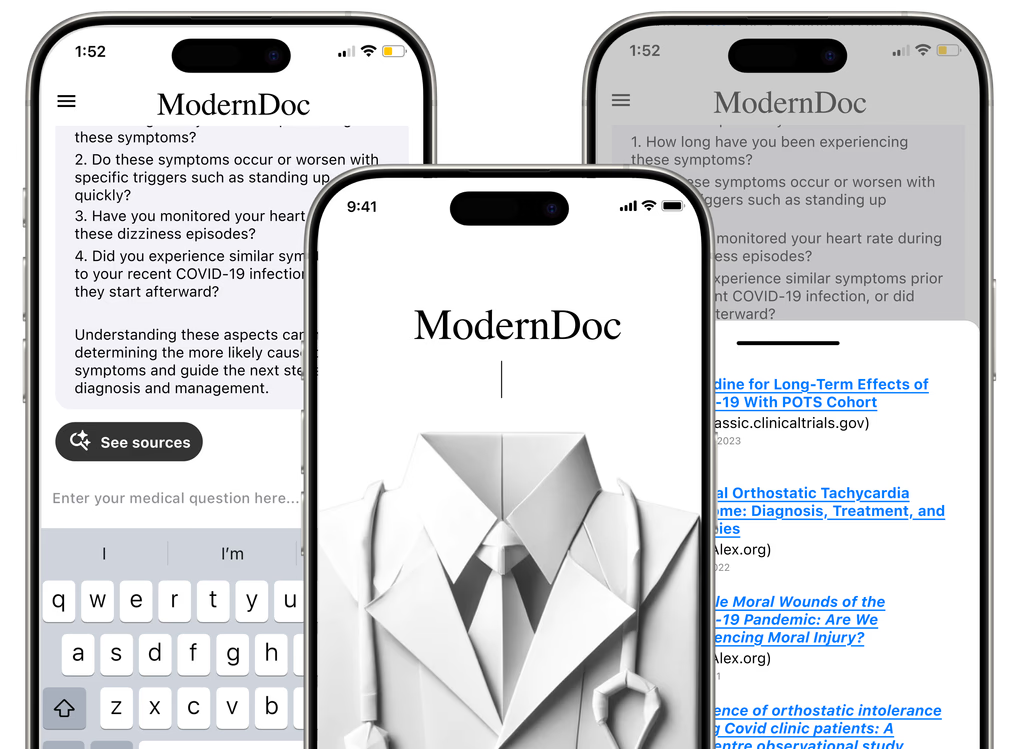
The Mystery Shop program is a dual-path curriculum in the operations and compliance space that reimagines how franchise locations engage with performance standards. By focusing on transparency and actionable feedback, it aims to bring more intention and clarity to the quality assurance process.
Problem
Performance audits… they can be stressful, confusing, and frustrating. When audits feel punitive rather than supportive, Truck Teams are left feeling blindsided, discouraged, and lacking awareness of what good looks like, while Operations Managers struggle with the logistics of effectively coaching them.
Solution
Design a framework that creates meaning from the audit process. Developed over a 4-month cycle, the new Mystery Shop curriculum is a 5-module, dual-path program that helps teams see what good looks like, feel supported, uncover operational patterns, and allows managers to make more intentional coaching decisions using audit dashboards.
Impact
The third-party vendor showcases this curriculum to other clients.
Completion rate, resulting in a consistent upward trend in audit scores post-launch.
Increase in optional shop orders by Operations Managers.
Here's how I got there
Discover
Visibility and trust in the audit process are critical in driving a competitive advantage for our franchises.
To guide the design process, I began with a deep-dive needs assessment with the Compliance Manager. The goal was to learn why franchise engagement with the Mystery Shop program was stagnating and to explore how potential users (Managers and Truck Team Members) currently felt about the audits.
Key Insights:
Zero Standardization
Training methods varied wildly by location. Without a single source of truth, the "rules" of the audit changed depending on who was coaching.
The "Gotcha" Culture is Toxic
Because TTMs felt they were being secretly graded without clear expectations, they viewed the program negatively. Without trust, they wouldn't use it to grow.
Managers Lack a Toolkit
Operations Managers struggled with the logistics of the program, specifically how to order additional audits for performance tracking and how to use the data to coach their teams.
Define
Opportunity to build trust by creating transparency.
Research pointed to a clear desire: Truck Teams want visibility into expectations, and Managers want a streamlined way to track and coach.
- USER PROBLEM: Lack of transparency. Teams hesitate to buy into the Mystery Shop program because they feel set up to fail without clear guidelines.
- BUSINESS PROBLEM: Missed Opportunities. Without a clear coaching framework, managers aren’t motivated to order additional audits, leading to stagnant performance and inconsistent brand standards.
How might we… reframe the Mystery Shop from a punitive audit into a transparent coaching tool in order to increase team confidence and drive a consistent upward trend in brand standards?
Goal: Increase perceived value of the audit program (measured through optional shop orders and score trends) by making the expectations transparent, recognizable, and easy to coach to.
Tools
To build a seamless multimedia experience, I anchored the interactive modules in Articulate 360 and designed custom UI elements via Adobe Creative Cloud. I utilized Vyond and Final Cut Pro to replace static manuals with dynamic, scenario-based storytelling. To meet a tight deadline, I leveraged AI to synthesize SME data and accelerate storyboarding, allowing for rapid iteration without sacrificing the quality of the final build.



Ideate
We knew we wanted to display operational standards through targeted, bite-sized modules. Our challenge was to surface these standards in a way that builds trust without disrupting the fast-paced daily logistics of a Truck Team Member.
Dual-Path Design Patterns Based on my needs assessment, I prioritized key features for the curriculum by separating the audience. We needed a dual-path curriculum:
For Truck Teams: Focus heavily on gamified feedback and clear, visual examples of “what good looks like” in the field.
For Managers: Focus on frictionless pattern recognition, dashboard navigation, and translating audit misses into 5-minute, on-the-spot coaching moments.
I facilitated bi-weekly Subject Matter Expert (SME) meetings to refine the content, prioritizing what was essential for launch versus what could be added in later iterations.
Final Design
After refining the content with the Compliance Manager and SMEs, we launched the comprehensive 4-month build.
While the data from previous training initiatives showed mixed adoption, this dual-path approach gave both user bases exactly what they needed. It came with the added benefit of being highly scalable for the third-party vendor.
Reflection
Boosting trust was just the first step. We saw encouraging signs immediately post-launch, but the real impact became clear through user behavior.
Three months post-launch, we monitored a consistent upward trend in scores. Furthermore, the 2% increase in optional shop orders proved that the new design fostered real adoption and changed the culture around the program. Looking ahead, we’d like to explore more ways to integrate AI-driven roleplay to help managers practice their coaching conversations.
Lessons Learned
Trust is foundational
If the learner feels like they are being tricked, the training will fail.
Key metrics can shift
Moving from just tracking “completion rate” to tracking “optional shop orders” gave us a much truer measure of success.
Involve SMEs early
This is a powerful way to see what really resonates with the operational reality of the business.
Project
Onboarding

The Problem: In a franchise model, maintaining a consistent “look” can be difficult. A friendly, professional appearance is the first step in winning over a customer, but the actual guidelines were buried in Google Docs. This led to a lot of mixed messaging and inconsistent enforcement, making it nearly impossible for our +160 locations to align with our core Exceptional Focus Areas (EFAs).
The Build: I knew that a 10-page PDF wasn’t the answer. Instead, in combination with other digital tools, I used Articulate Rise to build an interactive digital lookbook where learners could select different parts of the uniform to read about the specific requirements. Whether a Truck Team Member was prepping for a Vancouver downpour or a Phoenix heatwave, they feel confident, safe, and, most importantly, proud to represent the brand.
The Strategy: Partnering with Brand Excellence and Compliance, I established a definitive “Source of Truth” for the Learning Library to standardize global expectations. By breaking down complex safety standards into non-negotiable visual call-outs, I made sure every franchise, no matter their climate, had a clear outline for excellence that was easy to follow and even easier to enforce.
Project
Single Item Pricing Promotion
The Problem: A high-stakes sales activation only works if every franchise location is perfectly aligned on the ‘Why’ and the ‘How’ from day one. But with 100+ participating locations across three countries, we were dealing with three distinct pricing models and regional differences. To add to the pressure, we had a tight turnaround for a short-term promotion, meaning there was no room for a slow learning curve.
The Build: Simply dumping technical T&Cs onto a module wasn’t going to work. Instead, I created buy-in by centering the training on the what is in it for me (WIIFM), framing the promotion as a tool for the Truck Teams to close more sales. By localizing the content with regional pricing and terminology (swapping “Box Spring” for “Bed Base” for our Aussie Truck Teams down under), learners received the relevant information essential to providing a strong value prop and closing the job with confidence.
The Impact: Successfully enabled all participating locations to convert high-volume single-item jobs into full-truck value, increasing the Average Job Size (AJS) and exceeding the goal of +$540. By the end of the promotion, we achieved a 60% completion rate and a measurable knowledge lift of 4%.